Uncategorized
How International Beverage Wholesale Distribution Works
Oct
How International Beverage Wholesale Distribution Works: A Guide for Importers, Distributors and Retailers
International beverage wholesale distribution plays an important role in connecting beverage manufacturers, suppliers, wholesalers, importers, distributors and retailers across global markets. From energy drinks and soft drinks to beer, bottled water and other branded beverages, international trading networks help businesses source products and supply customers in different countries.
For companies operating in Europe, the Middle East and Africa, understanding how international beverage distribution works is essential for identifying reliable suppliers, controlling logistics costs, managing import requirements and building profitable wholesale operations.
Brandsway Trading GmbH is an international beverage trading company focused on supplying branded beverages to professional buyers. We work with businesses seeking beverage sourcing opportunities, wholesale supply arrangements and international distribution solutions.
This guide explains how international beverage wholesale distribution works, what buyers should consider when selecting suppliers, how logistics and payment terms affect transactions, and how businesses can approach international beverage procurement.
1. What Is International Beverage Wholesale Distribution?
International beverage wholesale distribution involves purchasing beverages in commercial quantities and supplying them to businesses in different markets.
Unlike ordinary retail purchases, wholesale transactions typically involve larger volumes, negotiated prices, defined delivery terms and commercial documentation.
A typical international beverage supply chain may involve several participants:
- Beverage manufacturers
- Authorized distributors
- Independent beverage wholesalers
- International trading companies
- Importers and exporters
- Regional distributors
- Supermarkets and retail chains
- Hotels, restaurants and hospitality businesses
- Convenience stores and independent retailers
Each participant has a different role.
Manufacturers produce the beverages, while wholesalers and trading companies source available products and supply them to other businesses. Importers handle the commercial requirements associated with bringing products into a country, while regional distributors supply retailers and other customers.
International beverage trading connects these different participants and helps products move from available supply to the markets where businesses need them.
2. Which Beverages Are Commonly Traded Internationally?
International beverage wholesale covers a broad range of products. The most suitable categories depend on consumer demand, market regulations, pricing, transportation costs and supplier availability.
Energy Drinks
Energy drinks are an important category in the international beverage trade. Products such as Red Bull and Monster are recognized in many markets and are sold through supermarkets, convenience stores, petrol stations, hospitality businesses and beverage wholesalers.
Businesses sourcing energy drinks should verify the exact product specification, can size, country of origin, case configuration and destination-market labeling requirements.
Beer and Other Malt Beverages
International beer trading includes established brands, regional products and specialty beers.
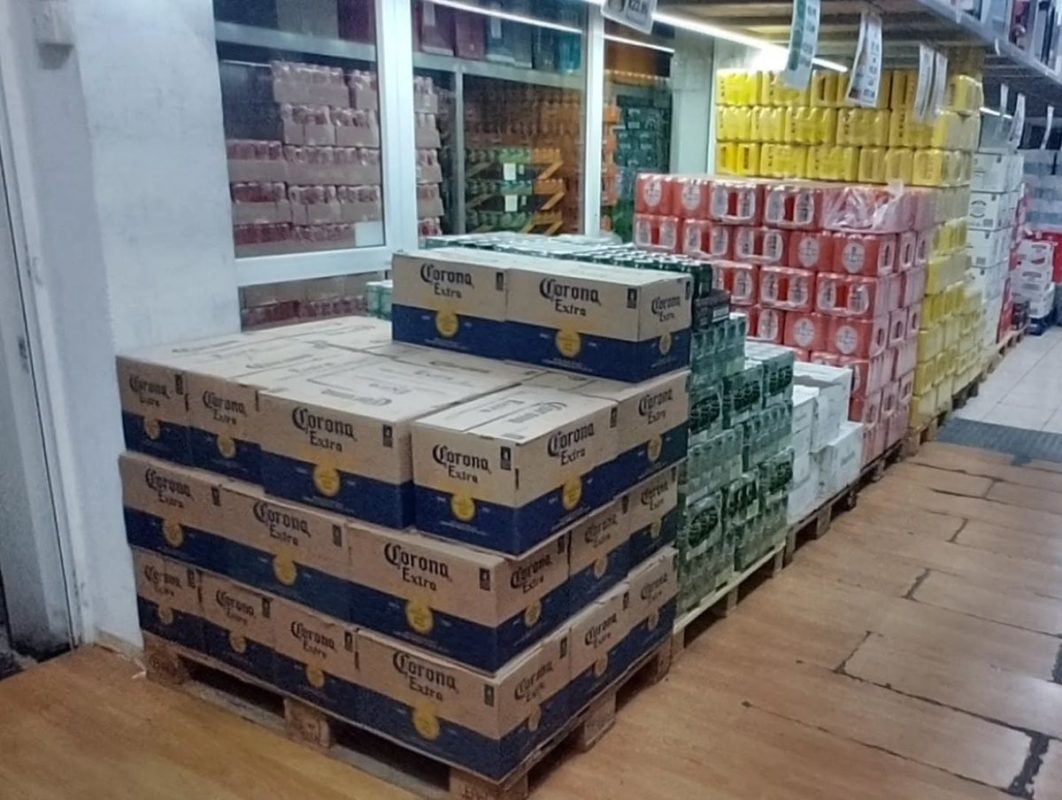
Products such as Corona Extra, Heineken, Budweiser, Modelo and other internationally recognized brands may be relevant to importers and distributors, depending on availability and local regulations.
Buyers should pay particular attention to country of origin, alcohol content, packaging format, excise requirements and permitted distribution channels.
Soft Drinks
Soft drinks remain an important component of beverage wholesale. This category includes carbonated drinks, fruit-flavored beverages, non-carbonated refreshments and other packaged drinks.
Retailers and wholesalers may require different bottle sizes, cans, multipacks and case configurations depending on their distribution channels.
Bottled Water
Bottled water is distributed through retail stores, hospitality businesses, offices, restaurants and other commercial channels.
Because transportation can represent a significant part of the total delivered cost, importers should assess the economics of shipping bottled water over long distances.
Other Beverage Categories
Depending on market requirements and product availability, international beverage trading can also include juices, functional drinks, ready-to-drink beverages and other packaged products.
Before purchasing any beverage internationally, buyers should confirm whether the product is legally permitted for import and sale in the destination country.
3. How the International Beverage Supply Chain Works
International beverage wholesale generally follows a series of commercial and logistical steps.
Step 1: Identifying the Product Requirement
The buyer determines which beverage is needed, the target quantity, preferred packaging and intended market.
For example, a distributor may require a full truckload of energy drinks for European retail customers, while an importer in Africa may be sourcing palletized soft drinks or beer for regional distribution.
The buyer should identify the exact product rather than requesting only a brand name.
Step 2: Finding a Suitable Supplier
The buyer contacts manufacturers, authorized distributors, wholesalers or international trading companies.
At this stage, it is important to verify the supplier’s business identity, product availability, commercial terms and ability to meet the required delivery conditions.
Buyers should request product specifications and confirm whether the supplier can provide the documentation required for the intended transaction.
Step 3: Requesting a Wholesale Quotation
A professional wholesale inquiry should include the product, quantity, destination and preferred delivery terms.
The supplier can then assess available stock, packaging, loading location, transportation requirements and applicable costs.
A detailed inquiry generally produces a more useful quotation than a general request for the lowest price.
Step 4: Confirming Product Specifications
Before confirming an order, both parties should agree on the exact product specification.
This may include the brand, product variant, can or bottle size, country of origin, packaging configuration, production information and best-before date.
For branded beverages, the buyer should also confirm that the product is suitable for the destination market.
Step 5: Agreeing on Commercial Terms
The buyer and supplier agree on price, quantity, payment conditions, delivery terms and order timing.
International transactions often use Incoterms to define the responsibilities of the seller and buyer concerning delivery, costs and risk.
Step 6: Preparing the Shipment
After the order is confirmed and the agreed conditions are met, the shipment is prepared.
Depending on the transaction, this can involve warehouse preparation, palletization, loading, transport arrangements, export documentation and coordination with freight providers.
Step 7: Delivery and Import Clearance
For international shipments, the buyer or the party responsible under the agreed delivery terms arranges the necessary import formalities.
Depending on the product and destination, requirements can include customs declarations, food or beverage documentation, labeling compliance, product registration, alcohol excise procedures and applicable taxes.
Step 8: Distribution to the End Customer
After delivery and any required clearance, the importer or distributor supplies the products to its own customers.
These may include wholesalers, supermarkets, convenience stores, hotels, restaurants and other licensed commercial buyers.
Understanding each step helps businesses identify risks and plan international beverage procurement more effectively.
4. How to Choose a Reliable Beverage Wholesale Supplier
Choosing the right supplier is one of the most important decisions in international beverage trading.
A low purchase price does not necessarily represent the best commercial offer if the product specification, delivery arrangements or documentation are unsuitable.
Professional buyers should evaluate several factors.
Business Verification
Confirm the supplier’s legal identity, registered business information and contact details.
Where relevant, verify company registration and VAT information through appropriate official sources.
Product Availability
Ask whether the requested quantity is currently available and whether the supplier can meet the required loading or delivery schedule.
Do not assume that advertised availability guarantees that a particular quantity is ready for shipment.
Product Authenticity and Traceability
For branded beverages, confirm the product’s origin and supply documentation.
Where applicable, verify batch information, labels, packaging and traceability records.
Commercial Transparency
A professional supplier should clearly explain the quotation, delivery terms, payment requirements and any additional costs.
Logistics Capability
Confirm the loading location, transport arrangements, expected lead time and responsibilities for export and import formalities.
Communication
Reliable communication is essential when coordinating cross-border transactions.
Buyers should receive clear answers to questions about product specifications, quantities, documentation and delivery.
5. Understanding Incoterms in International Beverage Trading
Incoterms are internationally recognized rules that help define the responsibilities of buyers and sellers in commercial shipments.
Several Incoterms are commonly encountered in international beverage trading.
EXW — Ex Works
Under EXW, the seller makes the goods available at the agreed location. The buyer generally takes responsibility for collection and subsequent transport, subject to the precise contractual arrangements.
EXW can be suitable for experienced buyers with established logistics arrangements, but the allocation of export-clearance responsibilities should be considered carefully.
FCA — Free Carrier
Under FCA, the seller delivers the goods to the carrier or another party nominated by the buyer at the agreed place.
FCA is often useful for commercial shipments where a buyer arranges international transport.
The named delivery location is important because it determines where delivery obligations are fulfilled.
FOB — Free on Board
FOB is generally intended for sea or inland waterway transport. Under FOB, the seller delivers the goods on board the vessel at the agreed port of shipment.
The seller and buyer should identify the port clearly and agree on the related responsibilities.
CIF — Cost, Insurance and Freight
Under CIF, the seller arranges and pays for the cost, insurance and freight to the named destination port.
However, the transfer of risk occurs when the goods are loaded on board the vessel at the port of shipment, rather than when they arrive at the destination.
DAP — Delivered at Place
Under DAP, the seller arranges delivery to the named destination, ready for unloading. The buyer is generally responsible for import clearance and applicable import duties and taxes.
The correct Incoterm depends on the shipment, transport mode and commercial agreement. Buyers and sellers should specify the named place or port and refer to the applicable Incoterms edition.
6. International Beverage Distribution in Europe
Europe is an important market for cross-border beverage distribution, with established road freight networks, ports, warehouses and wholesale channels.
Businesses operating in Germany, the Netherlands, Belgium, France, Italy, Spain, Poland, Romania, Austria and other European countries may source beverages from different European supply locations.
For buyers, the choice between domestic and cross-border sourcing depends on the product, quantity, price, delivery schedule and applicable regulatory requirements.
Before ordering, European buyers should confirm whether the beverage is intended for their market and whether the required product information and labeling are compliant.
Alcoholic beverages require particular attention to excise duties, movement procedures and applicable national rules.
Businesses trading within the European Union should also distinguish between customs procedures and other requirements that can still apply to goods moving between member states.
A reliable supplier should be able to discuss the product’s commercial specifications and the documentation available for the proposed transaction.
7. Beverage Wholesale Opportunities in the Middle East
The Middle East includes diverse markets with different import regulations, consumer preferences and distribution structures.
Professional beverage importers may source energy drinks, soft drinks, bottled water and other packaged beverages for supermarkets, hotels, restaurants, convenience stores and wholesale distribution.
When importing beverages into markets such as the United Arab Emirates, Saudi Arabia, Qatar, Kuwait, Oman and Bahrain, buyers must check the relevant local requirements.
These can include product registration, label language, ingredient declarations, permitted additives, customs procedures and other product-specific rules.
Alcoholic beverages are subject to additional restrictions and licensing requirements that differ by jurisdiction.
Buyers should verify compliance before committing to an international shipment.
Transportation costs, destination-port handling, import duties and local distribution expenses should also be included when calculating the total landed cost.
8. Beverage Wholesale Distribution in Africa
African beverage markets offer opportunities for importers, wholesalers and regional distributors, although commercial conditions vary significantly between countries.
Businesses may source branded energy drinks, soft drinks, bottled water and other packaged beverages for local and regional distribution.
Potential distribution channels include supermarkets, convenience stores, independent retailers, hotels, restaurants, wholesalers and food-service companies.
When sourcing products for countries such as Ghana, Nigeria, Cameroon, Côte d’Ivoire, Kenya, Tanzania, Senegal and South Africa, importers should evaluate several factors.
These include:
- Consumer demand and target retail prices
- Supplier pricing and minimum order quantities
- Freight and insurance costs
- Port handling and customs clearance
- Applicable duties and taxes
- Product registration and labeling requirements
- Storage conditions and shelf life
- Local distribution expenses
For international shipments, the cheapest purchase price may not produce the most competitive final cost.
Importers should calculate the full landed cost before confirming an order.
This is particularly important for beverages because packaging weight, shipment volume and transport distance can materially affect overall economics.
9. How to Calculate the Landed Cost of Imported Beverages
Landed cost is the total cost of bringing a product to the agreed destination, taking into account the relevant purchase, transportation and import expenses.
Depending on the transaction, it can include:
- Purchase price of the beverage
- Inland transportation
- Export handling
- Freight charges
- Cargo insurance
- Customs duties
- Excise duties, where applicable
- Import taxes
- Port handling
- Customs clearance fees
- Storage and delivery expenses
Not every cost applies to every transaction, and responsibility depends on the agreed commercial terms.
A buyer should calculate the expected landed cost per case, carton, bottle or can and compare it with the anticipated selling price.
For example, an importer buying energy drinks may find that a supplier with a slightly higher purchase price offers a lower overall cost because the loading location or transport arrangement is more favorable.
Accurate calculations help businesses evaluate suppliers on the basis of total commercial value rather than headline price alone.
10. Payment Terms and Risk Management
Payment arrangements are an important part of international beverage trading.
The appropriate method depends on the relationship between the buyer and seller, transaction size, creditworthiness, banking arrangements and commercial risk.
Possible arrangements include advance payment, deposits followed by balance payments, documentary arrangements and other mutually agreed methods.
Buyers should never assume that a particular payment structure is standard for every supplier.
Before transferring funds, verify the supplier’s identity, contractual details, invoice information and bank-account ownership through reliable channels.
For larger transactions, businesses may wish to obtain legal, banking or trade-finance advice.
Both parties should agree in writing on the conditions under which payment is due, when goods will be released and which documents will be provided.
Clear payment terms can help prevent misunderstandings and reduce commercial disputes.
11. Product Authenticity, Documentation and Regulatory Compliance
International beverage shipments must meet the applicable requirements of the destination market.
Depending on the product, the relevant requirements may concern ingredients, nutritional declarations, allergens, labeling, product registration, traceability, packaging and shelf life.
For alcoholic beverages, additional requirements can include alcohol-content declarations, excise procedures, import licensing and restrictions on distribution.
Buyers should also ensure that branded products are sourced through legitimate commercial channels and that the relevant transaction documents accurately describe the goods.
A supplier’s quotation should not be treated as a substitute for independent verification of the import requirements.
Importers are responsible for understanding their obligations under the applicable local rules, subject to the responsibilities agreed with the supplier.
12. Common Mistakes in International Beverage Wholesale
Businesses new to international beverage sourcing can make several avoidable mistakes.
Choosing a Supplier Based Only on Price
A low quotation may exclude important logistics expenses or relate to a different product specification.
Failing to Confirm the Origin
The brand’s country of origin and the actual production origin of a particular product may differ.
Buyers should specify the required origin and verify the product documentation.
Ignoring the Landed Cost
Freight, duties, taxes and handling expenses can change the economics of a transaction.
Overlooking Shelf Life
The remaining shelf life should be suitable for transportation, customs clearance, storage and the buyer’s distribution cycle.
Using Unclear Delivery Terms
A quotation that simply states a destination without defining the named delivery place and responsibilities can lead to misunderstandings.
Failing to Verify Import Requirements
A product available in one market may not automatically meet the requirements of another.
Careful preparation helps buyers avoid these problems and manage their supply chains more effectively.
13. How Brandsway Trading GmbH Supports International Beverage Buyers
Brandsway Trading GmbH is an international beverage trading company serving professional buyers seeking branded beverage products and commercial supply opportunities.
We focus on B2B inquiries from wholesalers, importers, distributors, retailers and other commercial customers.
Depending on current availability and the requirements of a transaction, buyers can contact us to discuss products such as energy drinks, beer, soft drinks and other packaged beverages.
Our commercial discussions can cover:
- Product specifications
- Available quantities
- Packaging configurations
- Country of origin
- Loading locations
- Delivery destinations
- Preferred Incoterms
- Shipping arrangements
- Documentation requirements
We encourage buyers to provide complete information about their requirements so that the proposed supply arrangement can be evaluated accurately.
Product availability, quantities, prices and delivery options must be confirmed for each inquiry.
14. How to Request an International Beverage Wholesale Quotation
A clear inquiry helps suppliers assess the commercial requirements and provide a more useful response.
When contacting Brandsway Trading GmbH, professional buyers should include:
Company name: Your registered business name.
Product: The exact beverage brand and variant.
Packaging: Bottle or can size and preferred case configuration.
Quantity: Number of cases, pallets, truckloads or other volume.
Country of origin: If a specific origin is required.
Destination: Delivery city, warehouse or port and country.
Delivery terms: Preferred Incoterm and named location.
Timing: Expected loading or delivery period.
Special requirements: Applicable product specifications, labeling or documentation needs.
This information helps establish whether a proposed product and supply arrangement meets the buyer’s requirements.
Conclusion: Building Reliable International Beverage Supply Relationships
International beverage wholesale distribution connects manufacturers, trading companies, importers, wholesalers, distributors and retailers across global markets.
Successful transactions depend on more than finding an attractive purchase price. Buyers need to verify suppliers, confirm product specifications, understand delivery responsibilities, calculate landed costs and comply with the applicable import requirements.
For companies sourcing beverages across Europe, the Middle East and Africa, careful planning can help reduce uncertainty and support more effective purchasing decisions.
Brandsway Trading GmbH welcomes inquiries from professional buyers interested in international beverage sourcing and wholesale supply opportunities.
Whether your business distributes energy drinks, beer, soft drinks or other packaged beverages, we invite you to contact our team with your product specifications, quantity and destination requirements.
Brandsway Trading GmbH
Email: info@brandswaytradinggmbh.com
Website: https://brandswaytradinggmbh.com/
Explore our Corona Extra product page: https://brandswaytradinggmbh.com/product/corona-extra/
Contact Brandsway Trading GmbH to discuss your international beverage sourcing requirements and request a commercial quotation.
